
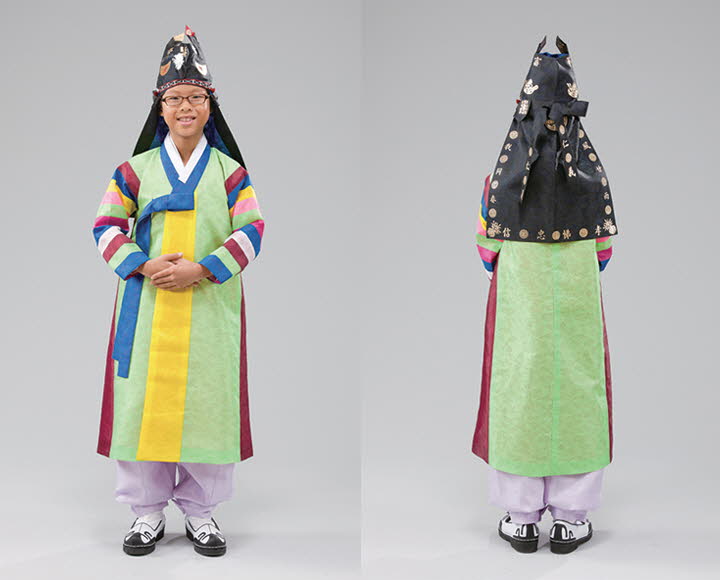
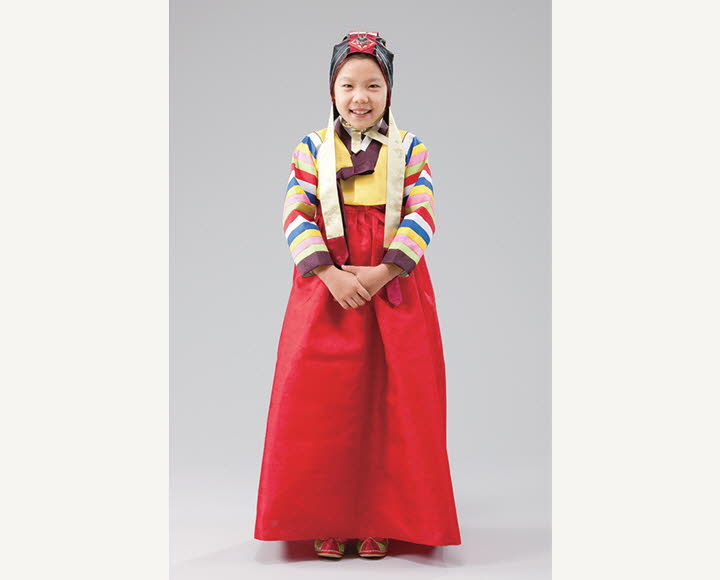
When a baby is born, the baby wears baenaetjeogori without a collar. On the first birthday, or dol, the baby wears saekdong jeogori and ggachi durumagi with a headgear, hogeon or gulle.
 Hanbok


When a baby is born, the baby wears baenaetjeogori without a collar. On the first birthday, or dol, the baby wears saekdong jeogori and ggachi durumagi with a headgear, hogeon or gulle.
Hanbok

It is the first clothing that baby wears. The design focuses on maintaining the body temperature and the hygiene. It is made big enough to easily put on and take off. The goreum of the baenaetjeogori is made with a cotton thread, wishing the baby a long life. Babies wear baenaetjeogori only until they are 100 days old, but they are preserved as they are considered priceless. There is a myth that once the child grows up, taking it to an important event like a test will bring the child good luck.
 Doljanchi celebrating the first birthday
The first birthday is called dol. Koreans hosted a party to celebrate the first birthday of the baby and to wish the baby a good life. While the baby had only worn white clothing until dol like a baenaetjeogori, the baby gets to wear colorful clothes for the first time.
 Dolsang prepared for the first birthday
Baby boys wore a hogeon with tigers embroidered to wish them to be brave. Baby girls wore a colorfully decorated gulle.
 Tarae beoseon
Babies wore tarae beoseons for doljanchi, on the first birthday party. A navy string for boys and a red string for girls was tied on the ankle to tighten the beoseons.
 Dolddi
i
Babies wore the special clothing for dol and had a dolddi around their waist on their first birthday. The dolddi was made long enough to go around the waist more than once to wish the birthday baby a long life.
 Ggachi durumagi
 Saekdong jeogori
A healthy baby celebrating the first birthday, or dol, wore a saekdong jeogori. To wish the baby to only accept the good and repel the bad, fabrics of five colors - red, yellow, blue, green, and white - were sewn together.
 Hanbok
It is a hat that boys wore on Korean New Year's Day or dol. It was made in the shape of a tiger to prevent bad energy or evil spirits from coming near while wishing for health and longevity.
 Hanbok
It is a hat for girls that has several strands of daenggi. Today, girls usually wear it on their doljanchi, or the first birthday party, with a saekdongjeogori and a scarlet-colored skirt.
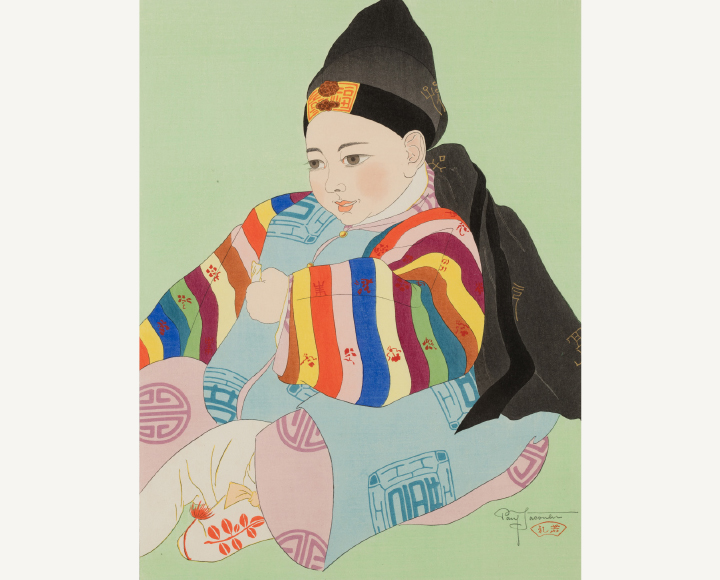
“Korean Baby in Ceremonial Costume, Seoul” (Paul Jacoulet)
 Anbang
On their dol (first birthday), a baby wore a special first birthday outfit and a waistband called doltti. The waistband is embroidered with the ten symbols of longevity or words of blessing to wish for the health and good fortune of the baby.

