Mask
The Everyday Use of Masks,
the Ideal of Masked Plays
02. Unified Desires(같은 마음)
Mask plays reflect the collective spirit and identity of a community. Each culture’s rendition of these performances reveals a unique worldview. In Korea, the mask play blurs the boundary between audience and performers, creating a shared, open experience. The setting for Chinese mask play pays homage to heroes, akin to a celebratory red carpet. Meanwhile, the Japanese version transforms the stage into a shrine, honoring deities. Despite these distinctive backdrops and stories, the core desires resonating within these plays are surprisingly universal. They capture dreams of prosperity, bountiful harvests, and abundant catches of fish and game. Moreover, there's a shared hope for protection against illnesses and misfortunes. Consequently, the mask plays from Korea, China, and Japan often revolve around themes of prosperity, and universally echo narratives that aim to ward off evil and attract good fortune.
2-1. Eating to One’s Content(배불리 잘 먹고)
Although there are differences depending on the region and natural environment, the three countries are generally rooted in agricultural culture. For people in the past, the result of agriculture was a primitive fear and wish that determined survival. Therefore, there is a mask play in common in the three countries that takes them away hoping that farming will go well.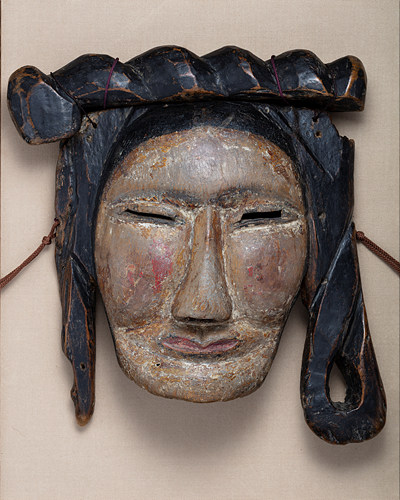
Gaksi(각시)
Goryeo dynastyNational treasure
Andong hahoemaeul bojonhoe
Mask of Seonghwang, the guardian deity of the Andong hahoe
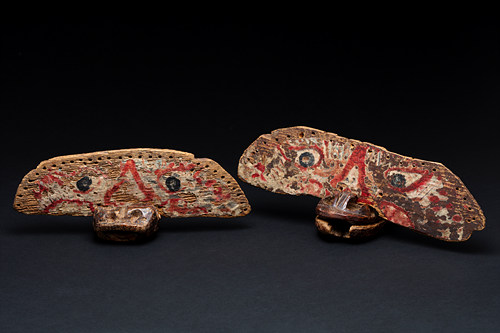
Juji(주지)
Goryeo dynastyNational treasure
Andong hahoemaeul bojonhoe
An imaginary animal mask in which male and female appear together to give prosperity and good harvest
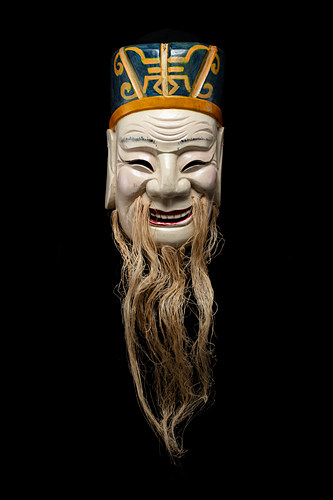
Nuogong(傩公)
late 20th century It is a god appearing in Chinese mask plays and helps the offspring thrive.
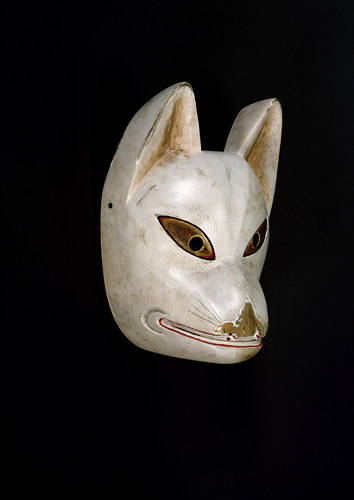
Fox(きつね)
late 20th century Japan National History and Folklore Museum
Unlike Korea, which considers foxes as crafty animals, foxes are believed to be the gods of rice farming and agriculture in Japan.
2-2. Living Healthily and Well(건강하게 잘 사는)
Narye(儺禮)* had a great influence on the mask plays of the three countries of Korea, China, and Japan. Accordingly, there are many contents to expel ghosts and pray for their well-being. The story of a powerful being appearing, removing all evil and evil(厄), and giving blessings relieves anxiety about uncertainty in life and gives hope for tomorrow.* On the last day of the year on the lunar calendar, a ritual in which masked people in the royal court, government office, and private sector used to drive away ghosts by chanting spells with certain tools
① Lion - God of get rid of the bad things(사자 – 벽사의 왕)
The lion is a foreign animal introduced through the western region and served as a guardian of Buddhism and the royal family, so it was considered to be a symbol of the chasing evil in the private sector. The lion dance prays for good luck through the lion, the king of beasts. With lions in front, they visit every house and pray for peace and a good harvest.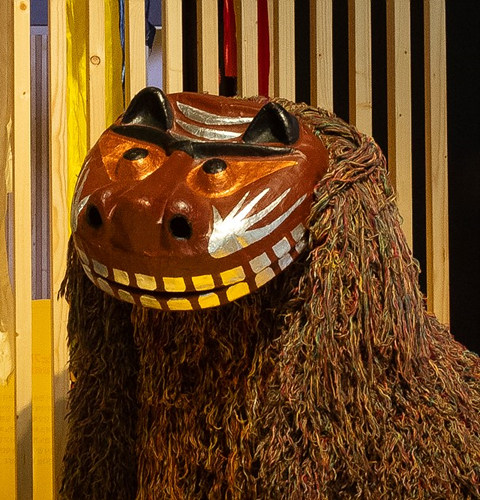
Lion(사자)
21st centuryIt is a lion mask in the Bukcheong Saja Noreum of Korea, which plays a role in driving out demons and bringing peace and happiness to the village. It is characterized by decorating it with pentagonal hair.
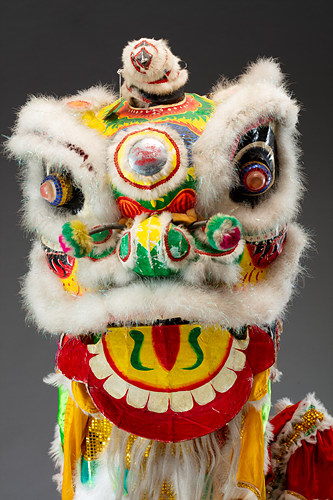
Lion(狮子)
late 20th century Lion Mask of Lion Dance in Fushan(仏山), Guangdong Province(広東省), China
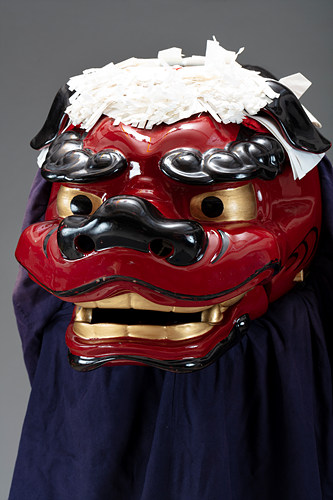
Lion(獅子)
late 20th century Isedai Kagura Kosha
The lion mask of Isedai Kagura(伊勢大神楽) is believed to ward off evil such as illness and give good fortune.
② Guardian God of cardinal points(오방오제-방위를 지키다.)
In Korean, Chinese, and Japanese mask plays, the influence of the Five Elements theory on the shape of masks, dance shapes, colors of clothing and accessories, and stage composition is strongly expressed. The mask plays of the three countries have something in common that a five-way general who keeps his bearings appears.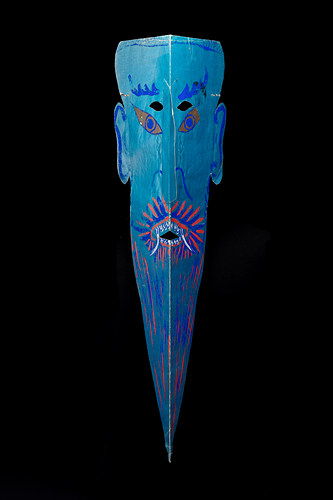
Guardian God of East(東方靑帝將軍)
early 20th centuryThe mask of Jinju Ogwangdae protects the east. It has a blue face representing the east.
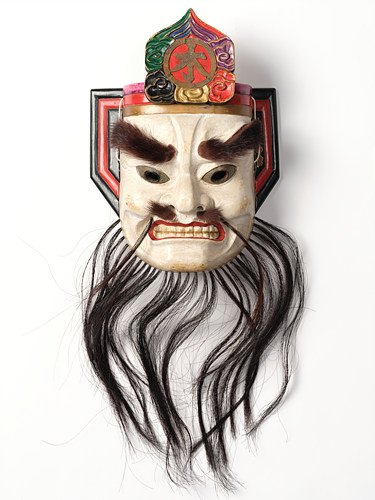
Kukunochi(句句廼馳尊)
late 20th century Japan National History and Folklore Museum
It is a mask of Izumo Kagura protects the east. The headdress is engraved with the letter "tree" representing the east.
③ Ugly God - The uglier, the stronger the power to get rid of evil.(흉신(凶神) - 못생길수록 벽사(辟邪)의 힘은 더 강하다.)
Scary masks with red faces, bumpy bumps, pointed horns, and sharp teeth appear in common in Korea, China, and Japan. Unlike what they look like, these masks are all good characters that help people by eliminating bad energy and disease.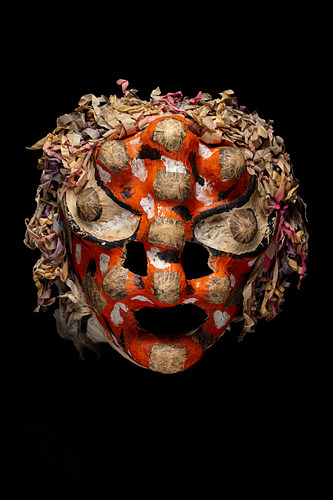
Mokjung(목중)
early 20th centuryIt is a mask of Bongsan Talchum in Korea, and appears with a large bell on the knee and willow branches on the waist. The uneven bump was expressed on the red face, highlighting its characteristics as a wall painting mask.
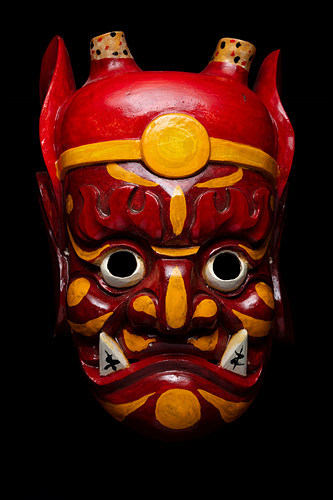
Kaishan(开山)
late 20th century It is a mask of Nanfeng County(南風県), Jiangxi Province(江西省), China. Dancing with a long axe to ward off disease and evil.
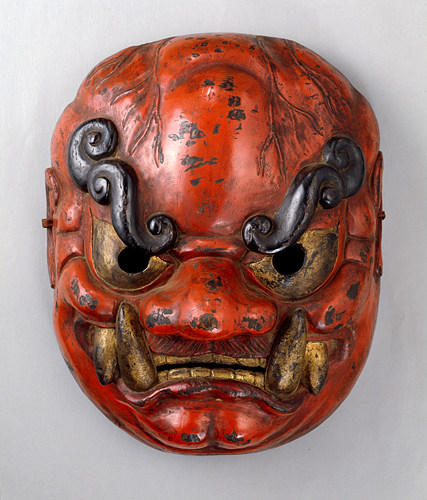
Oni(鬼)
late 20th century Japan National History and Folklore Museum
It is a demon mask from Aomori Prefecture(青森県). demon mask has a dual personality in Japan. He is a villain who is the object of extermination, and he has a powerful energy to ward off evil.